
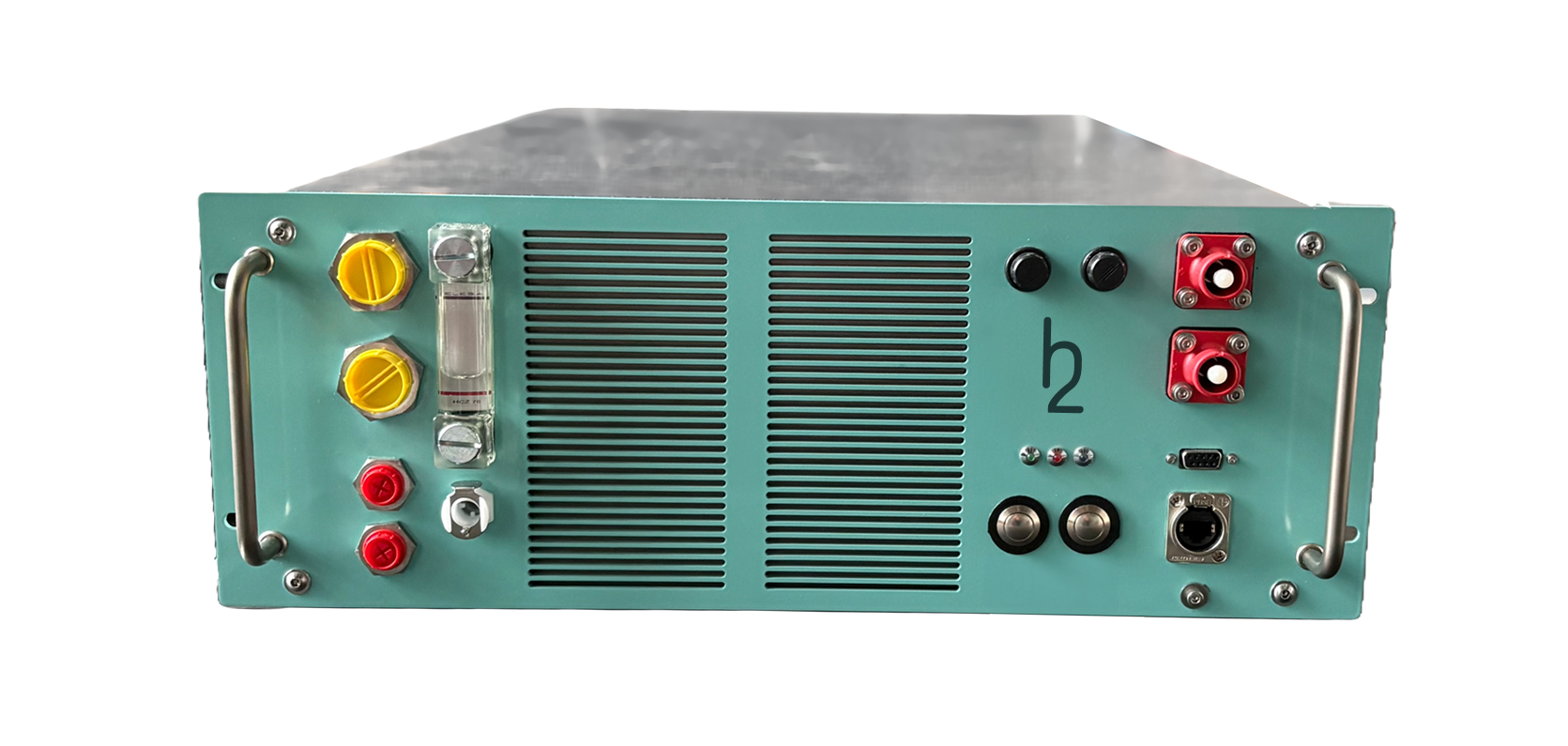
The Starting Point
The first Powerbox front panel was functional, but designed the way engineers design for engineers: straight ventilation slits, connectors grouped and then placed wherever they fit best mechanically, and a logo that had been reduced to a cropped fragment, only the "h2" carved out, with the rest of the icon lost. It worked, but it didn't communicate.
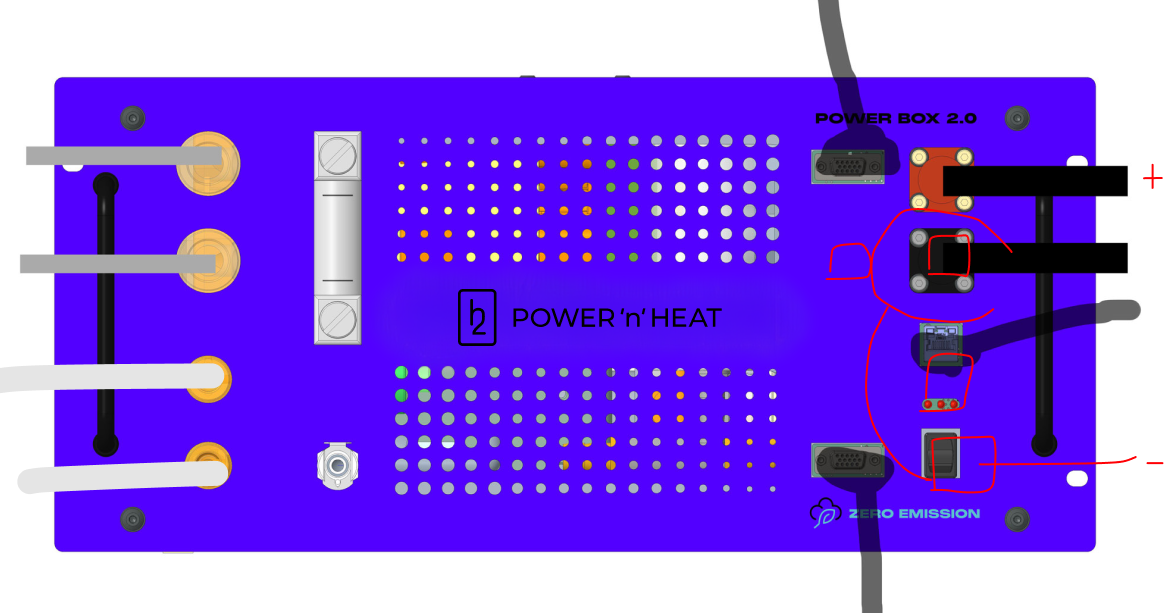
Brand x Product x Tech
Together with the design engineer and electric engineer I worked to redesign the panel as a piece of user-facing product design — not just a technical surface, but the first physical touchpoint a customer or technician has with the system.
The ventilation grid became the centerpiece of that shift. Instead of plain slits, I designed a dynamic hole pattern that visually echoes the gas and energy flow the system is actually built around – always in coherence with the needed airflow – turning a purely functional element into something that reads as deliberate, organic, almost alive, rather than incidental.
Connectors were already grouped by function before my involvement. What was missing was the experience of actually connecting the box: how cables and tubes run, how much room there is to work, how easy or awkward it is to physically plug everything in when the box sits in a rack or system. I reworked the layout with that physical interaction in mind, so connecting the unit became intuitive rather than something you had to fight with.
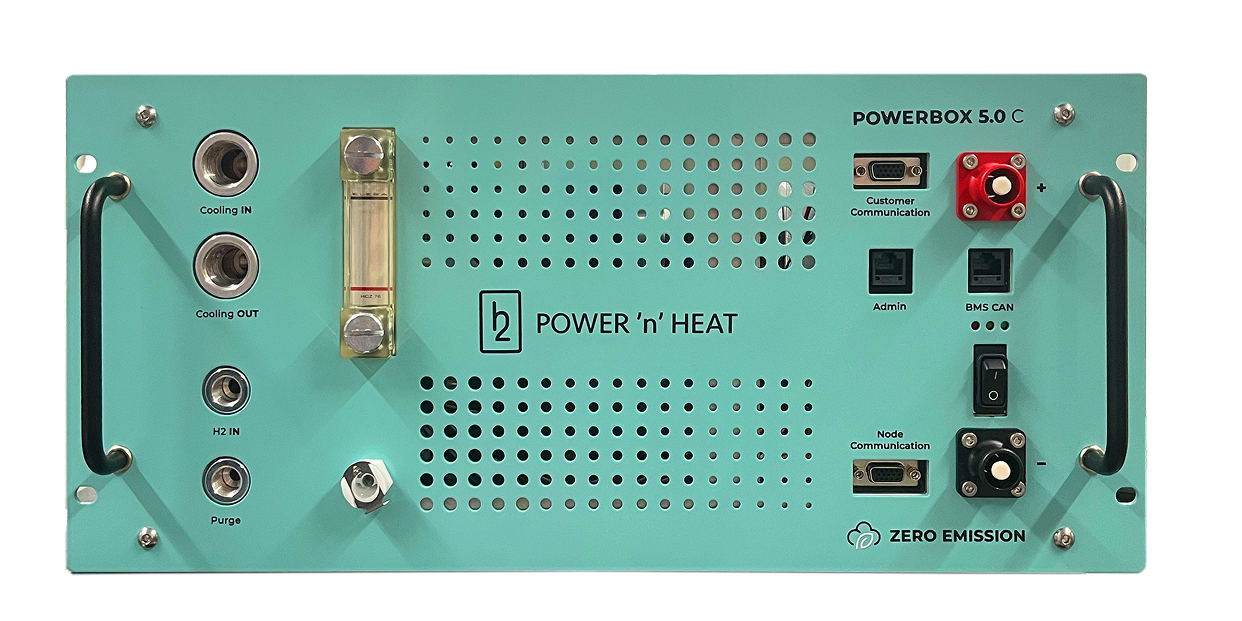
Iterating with the Engineering
This is the next generation, prompted by a hardware change: the water level indicator was replaced by a different mechanism and placement. Rather than treating this as a disruption to the design, I adapted the panel layout to integrate the change while preserving the visual language and usability standards already established — proof that the design system could flex with ongoing engineering development, not just survive a single release.
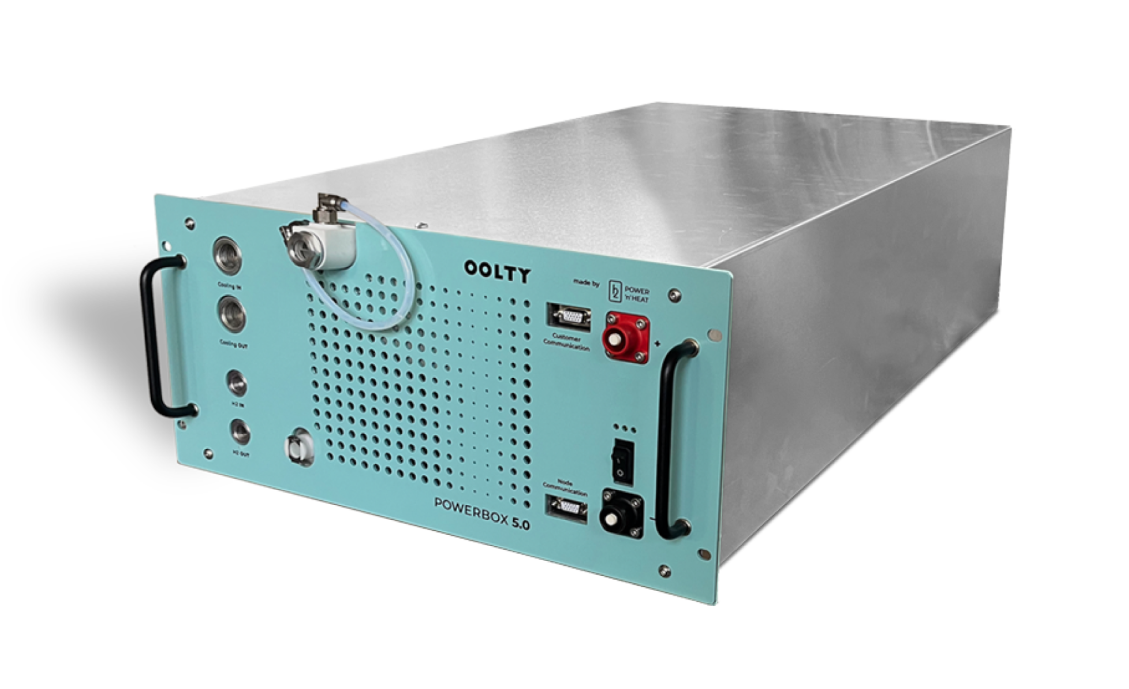
Why This Matters
This work shows what happens when brand and design have a seat at the engineering table from the start: the difference between a panel an engineer assembled for function, and one designed for the person who has to read, operate, and trust it.